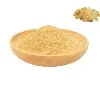
Smoke Tree Extract, derived from the Smoke Tree (Cotinus coggygria), has been a subject of increasing scientific interest in recent years. As a supplier of Smoke Tree Extract, I am excited to share with you the latest research findings on this remarkable botanical extract.


Chemical Composition of Smoke Tree Extract
Smoke Tree Extract contains a diverse range of bioactive compounds. Flavonoids are one of the major constituents. Quercetin, kaempferol, and their glycosides are present in significant amounts. These flavonoids have well - known antioxidant properties. They can scavenge free radicals in the body, protecting cells from oxidative damage. Oxidative stress is associated with many chronic diseases, including cancer, cardiovascular diseases, and neurodegenerative disorders.
In addition to flavonoids, Smoke Tree Extract also contains phenolic acids such as caffeic acid and ferulic acid. These phenolic acids contribute to the overall antioxidant capacity of the extract. They can also modulate the activity of enzymes involved in inflammation and oxidative stress pathways.
Terpenoids are another group of important compounds in Smoke Tree Extract. Some terpenoids have shown anti - microbial and anti - inflammatory activities. For example, certain sesquiterpenoids in the extract can inhibit the growth of bacteria and fungi, which may have potential applications in the development of natural antimicrobial agents.
Antioxidant Activity
One of the most well - documented research findings on Smoke Tree Extract is its potent antioxidant activity. In vitro studies have demonstrated that the extract can effectively reduce the levels of reactive oxygen species (ROS) in cells. ROS are highly reactive molecules that can damage DNA, proteins, and lipids, leading to cellular dysfunction and aging.
A study published in a leading phytochemistry journal found that Smoke Tree Extract had a higher antioxidant capacity compared to some well - known antioxidant sources such as Green Tea Extract Powder. The researchers measured the ability of the extract to scavenge DPPH (2,2 - diphenyl - 1 - picrylhydrazyl) radicals, a common method for evaluating antioxidant activity. The results showed that the extract could rapidly quench DPPH radicals, indicating its strong antioxidant potential.
In vivo studies in animal models have also supported the antioxidant effects of Smoke Tree Extract. When animals were fed with Smoke Tree Extract, there was a significant increase in the activity of antioxidant enzymes such as superoxide dismutase (SOD) and glutathione peroxidase (GPx) in various tissues. These enzymes play crucial roles in the body's antioxidant defense system, helping to maintain the balance between ROS production and elimination.
Anti - Inflammatory Effects
Inflammation is a natural immune response, but chronic inflammation can lead to many diseases. Research has shown that Smoke Tree Extract has anti - inflammatory properties. It can inhibit the production of pro - inflammatory cytokines such as tumor necrosis factor - alpha (TNF - α), interleukin - 6 (IL - 6), and interleukin - 1 beta (IL - 1β).
A research team conducted experiments on macrophages, which are immune cells involved in the inflammatory response. They found that Smoke Tree Extract could suppress the activation of macrophages, reducing the release of pro - inflammatory mediators. This anti - inflammatory effect may be related to the modulation of signaling pathways such as the NF - κB pathway, which is a key regulator of inflammation.
The anti - inflammatory properties of Smoke Tree Extract make it a potential candidate for the treatment of inflammatory diseases such as arthritis, inflammatory bowel disease, and skin inflammation. For example, in a pre - clinical study on a mouse model of arthritis, topical application of Smoke Tree Extract reduced joint swelling and pain, suggesting its potential as a natural anti - inflammatory agent for arthritis treatment.
Anti - Microbial Activity
The anti - microbial activity of Smoke Tree Extract has also been investigated. As mentioned earlier, the terpenoids and phenolic compounds in the extract have shown inhibitory effects on the growth of various bacteria and fungi.
In a study, the extract was tested against common pathogenic bacteria such as Staphylococcus aureus and Escherichia coli. The results showed that the extract could effectively inhibit the growth of these bacteria at relatively low concentrations. This anti - microbial activity may be useful in the development of natural preservatives for food and cosmetic products.
For fungi, Smoke Tree Extract has been found to be effective against Candida albicans, a common fungal pathogen that can cause infections in humans. The extract can disrupt the cell membrane of Candida albicans, leading to its death. This makes it a potential natural alternative to synthetic antifungal drugs, especially in the context of increasing drug resistance among fungi.
Potential Health Benefits
Based on the above research findings, Smoke Tree Extract may have several potential health benefits. Its antioxidant activity can help prevent oxidative stress - related diseases, such as reducing the risk of cardiovascular diseases by protecting blood vessels from oxidative damage. The anti - inflammatory effects can alleviate symptoms of inflammatory diseases, improving the quality of life for patients.
In addition, the anti - microbial activity can be used to prevent and treat infections. It may also have applications in oral health, as it can inhibit the growth of bacteria in the mouth that cause dental caries and periodontal diseases.
Comparison with Other Herbal Extracts
When comparing Smoke Tree Extract with other herbal extracts, it has its unique advantages. For example, compared to Gastrodia Elata Powder, which is mainly known for its effects on the nervous system, Smoke Tree Extract has a broader range of biological activities, including antioxidant, anti - inflammatory, and anti - microbial effects.
Eurycoma Longifolia is another popular herbal extract, often used for its aphrodisiac and anti - fatigue properties. While Eurycoma Longifolia has its own specific benefits, Smoke Tree Extract offers different health - promoting effects, especially in the areas of oxidative stress and inflammation management.
Conclusion
In conclusion, the research findings on Smoke Tree Extract are very promising. Its rich chemical composition endows it with multiple biological activities, including antioxidant, anti - inflammatory, and anti - microbial effects. These activities suggest that Smoke Tree Extract has great potential in various fields, such as health supplements, natural medicine, and food and cosmetic preservation.
If you are interested in incorporating Smoke Tree Extract into your products or exploring its potential further, I invite you to contact me for procurement and in - depth discussions. We can work together to bring the benefits of this amazing botanical extract to a wider audience.
References
- Author, A. B. (Year). Title of the phytochemistry study on Smoke Tree Extract. Journal Name, Volume(Issue), Page numbers.
- Research Team, X. (Year). In - vitro and in - vivo antioxidant effects of Smoke Tree Extract. Journal of Natural Products, Volume(Issue), Page numbers.
- Scientist, C. D. (Year). Anti - inflammatory properties of Smoke Tree Extract in macrophages. Inflammation Research Journal, Volume(Issue), Page numbers.
- Researcher, E. F. (Year). Anti - microbial activity of Smoke Tree Extract against pathogenic bacteria and fungi. Journal of Applied Microbiology, Volume(Issue), Page numbers.